 | Butterfly Conservation Saving butterflies, moths and our environment | Upper Thames Branch |  |

Brimstone (Gonepteryx rhamni) | |||||||||
| Description | |||||||||
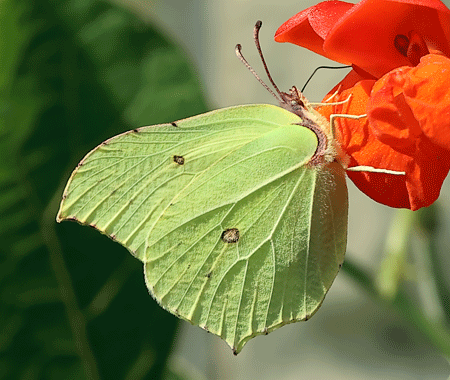
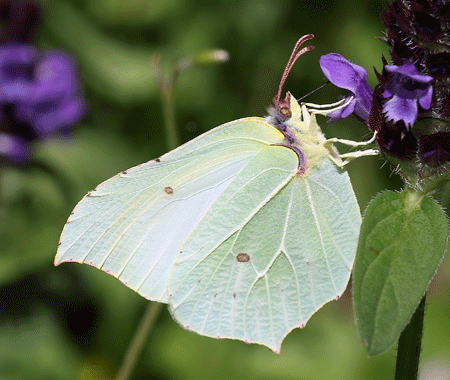
| Wing span: 60-74 mm. One of the first butterflies to be seen in the spring, the Brimstone is also one of the longest-lived in its adult form, with some individuals living for 10 or 11 months. The male is butter-yellow, whereas the female is more greenish-yellow. It always rests with its wings closed. It can be found anywhere that the larval food plants grow, which is usually damp woodland. | |||||||||
| Images (click to enlarge) | |||||||||
| |||||||||
| Life Cycle | |||||||||
| Hibernating adults generally emerge in March and are on the wing until mid-June. These give rise to a second generation, which flies from late July to October or November, before entering hibernation. | |||||||||
| Larval Foodplants | |||||||||
| The primary larval foodplants are Purging Buckthorn (Rhamnus cathartica) and Alder Buckthorn (Frangula alnus). | |||||||||
| Nectar Sources | |||||||||
| Favourite nectar sources are Thistles, Knapweeds, Scabious and Teasels. | |||||||||
| UK Conservation Status | |||||||||
| Least Concern | |||||||||
| Earliest UTB first sighting (since 2004) : 1st January | |||||||||
| Mean UTB first sighting (since 2004) : 24th January | |||||||||
| Distribution and Sites | |||||||||
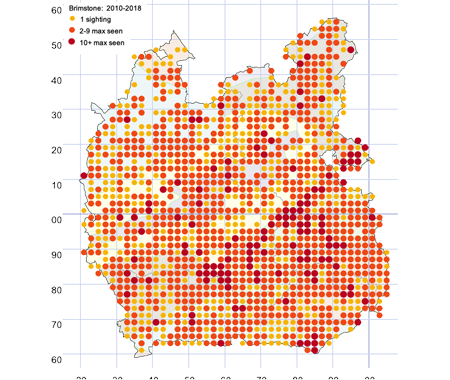 Key
|
| ||||||||
| Related Species | |||||||||
| |||||||||
 1 sighting
  2-9 max seen
  10+ max seen
Copyright © Butterfly Conservation Upper Thames Branch 2007 - 2026. Privacy and Copyright Statement
Butterfly Conservation : Company limited by guarantee, registered in England (2206468)
Registered Office: Manor Yard, East Lulworth, Wareham, Dorset, BH20 5QP, Tel: 01929 400 209
Charity registered in England & Wales (254937) and in Scotland (SCO39268)
Butterfly Conservation : Company limited by guarantee, registered in England (2206468)
Registered Office: Manor Yard, East Lulworth, Wareham, Dorset, BH20 5QP, Tel: 01929 400 209
Charity registered in England & Wales (254937) and in Scotland (SCO39268)