
Hedges and, in some gardens, woodland edges, are very helpful to butterflies and moths. They can provide foodplants and give shelter from intense sun, wind and rain and in winter, frosts. They provide places for the caterpillars, pupae and adults to hide away from predators and parasites. The tallest plants in the hedge, or stems protruding from it, may well act as sites where adults can congregate to find mates and, of course, many of the hedge plants, on whose leaves caterpillars feed, also have flowers with nectar, and can produce fruits and nuts for a range of wildlife.
The best hedges are 3m/10ft tall and at least as wide. They should not be trimmed to produce a vertical edge, but have small bays and promontories as various species in the hedge grow at different rates. The benefit of the hedge will be increased if a 0.7m/2.5ft wide strip of uncut grass borders its base.
(Malus spp.)
(Prunus spinosa)
· November Moth
· Pale Brindled Beauty
· Yellow-tail
· Early Thorn
· Emperor Moth
· Grey Dagger
(Rubus fructiosus)
· Peppered Moth
· Brown-tail
· Emperor Moth
(Rhamnus, Frangula spp.)
· Mottled Beauty
· Pale Brindled Beauty
(Corylus avellana)
(Lonicera spp.)
· Early Thorn
(Hedera helix)
· Swallow-tailed Moth
(Ligustrum ovalifolium)
(Salix spp.)
· Pale Prominent
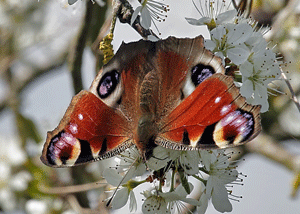
Peacock on Blackthorn

Honeysuckle
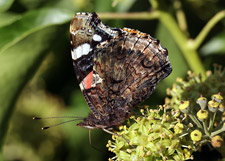
Red Admiral on Ivy